How do I execute a project?


Typically, you need to understand the flow of a project lifecycle

Initiation: The project is formally approved, and high-level objectives are defined (Project Charter).
Planning: The detailed roadmap is created (scope, schedule, budget, risk plans).
Execution: The actual work is performed to create deliverables.
Monitoring & Controlling: This runs at the same time as Execution. It involves tracking progress against the plan and taking corrective action as needed.
Closure: Once the work is accepted, all administrative tasks are finished, and the project is formally closed.
Let’s dig in detail
The first step is usually defining the project goals and scope.
This critical initial phase involves:
Establishing the 'Why' (Goals): Clearly stating the purpose of the project and what it is intended to achieve.
Determining the 'What' (Scope): Specifying the deliverables, features, and boundaries of the project, clearly outlining what is and what is not included.
Identifying Stakeholders: Recognizing the people, groups, or organizations that have an interest in or will be affected by the project.
This step ensures everyone is aligned to the expected outcome before any substantive work begins.
Once that foundational step is complete the very next step in the Project Planning Phase is typically:
Estimate Costs: Determine the budget required to achieve the defined goals and scope.
Build the Work Breakdown Structure (WBS): This involves breaking down the major deliverables into smaller, more manageable components, tasks, and packages. This decomposition is crucial for scheduling and resource allocation.
Once you have the detailed tasks from the WBS, you immediately follow up with:
Estimate Resources and Budget: Determine what people, equipment, and money are needed for each task, and calculate the total estimated cost.
Develop the Schedule: Sequence the tasks (identifying dependencies) and estimate the duration for each to create a realistic project timeline with key milestones and deadlines.
The next crucial step in the Project Planning Phase is to finalize the supporting management plans. This involves detailing plans for areas that govern how the work detailed in the schedule will be handled:
Resource Management Plan: Solidify the assignment of specific resources (people, equipment, materials) to the tasks identified in the WBS and Schedule. You confirm availability and address any resource overallocation identified during scheduling.
Risk Management Plan: Document the detailed strategies for risks identified earlier. This includes defining how risks will be monitored, and what contingency plans will be activated if a risk occurs.
Communication Plan: Finalize who gets what information, when, and how (e.g., status reports, meeting cadence, escalation paths).
Quality Management Plan: Define the specific quality standards and the processes for Quality Assurance (QA) and Quality Control (QC) that will be used to verify deliverables meet the scope requirements.
All the subsidiary plans (Scope baseline, Schedule, Cost, Resource, Risk, Communication, Quality, etc.) are then integrated into the comprehensive Project Management Plan (PMP). This document serves as the single source of truth and the roadmap for the upcoming Execution Phase. The final step in planning is getting formal stakeholder approval on this complete plan before execution begins.
The next phase in the standard project management lifecycle, following the detailed Project Planning stage (which includes developing the WBS, schedule, and subsidiary plans), is Project Execution.
This is where the Project Management Plan you just created is put into action. The team starts doing the actual work to produce the project deliverables.
Key activities during Execution include:
Direct and Manage Project Work: Carrying out the tasks defined in the schedule and WBS.
Acquire and Develop the Team: Bringing on the necessary resources and ensuring they are ready to work.
Manage Communications: Distributing information as outlined in the Communication Plan.
Implement Approved Changes: Putting approved change requests into effect.
Perform Quality Assurance: Regularly checking processes to ensure they meet the quality standards defined in the Quality Management Plan.
This phase often runs concurrently with the Monitoring and Controlling phase.
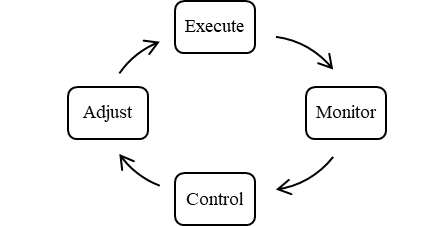
While you are executing the work (doing the tasks from the schedule), you must Monitor and Control that execution to ensure you stay on track. So, the next logical action after you start execution is to Monitor and Control the project.
This phase acts as the project's oversight system. Its goal is to track performance, identify variances from the plan, and take corrective action. Key activities here include:
Monitor Performance: Track actual progress (time, cost, scope, quality) against the baselines set in the Planning Phase.
Manage Changes: Implement the Integrated Change Control Process—reviewing, approving, or rejecting any requested changes to the scope, schedule, or budget.
Manage Risks and Issues: Actively monitor new risks and manage any issues that have arisen.
Performance Reporting: Regularly report the project status (e.g., Earned Value Management, status meetings) to stakeholders.
This feedback loop continues until all deliverables are complete
The next phase in the standard Project Management Life Cycle after Execution and concurrent Monitoring and Controlling is Project Closure (or Closing). This final phase officially concludes the project. It's not just about delivering the final product; it's about formally wrapping everything up. Key activities during Closure include:
Final Deliverable Acceptance: Obtaining formal sign-off from the customer or sponsor that the product, service, or result meets the acceptance criteria.
Contract Closure: Finalizing and closing all procurement contracts and administrative obligations.
Lessons Learned: Conducting a post-mortem or retrospective meeting to document successes, failures, and process improvements for future projects.
Releasing Resources: Formally releasing team members and equipment back to their functional organizations or new projects.
Final Reporting: Creating a final project report summarizing performance against the plan, budget, and schedule, and communicating the project's completion to all stakeholders.
Once closure is complete, the project is officially over.
Comments